A pile, not a package
P&L exports, balance sheets, tax returns and a spreadsheet the owner's bookkeeper built. Different periods, different account names. Before any analysis, someone has to put it in order.
LedgerView · for investment bankers & M&A advisors
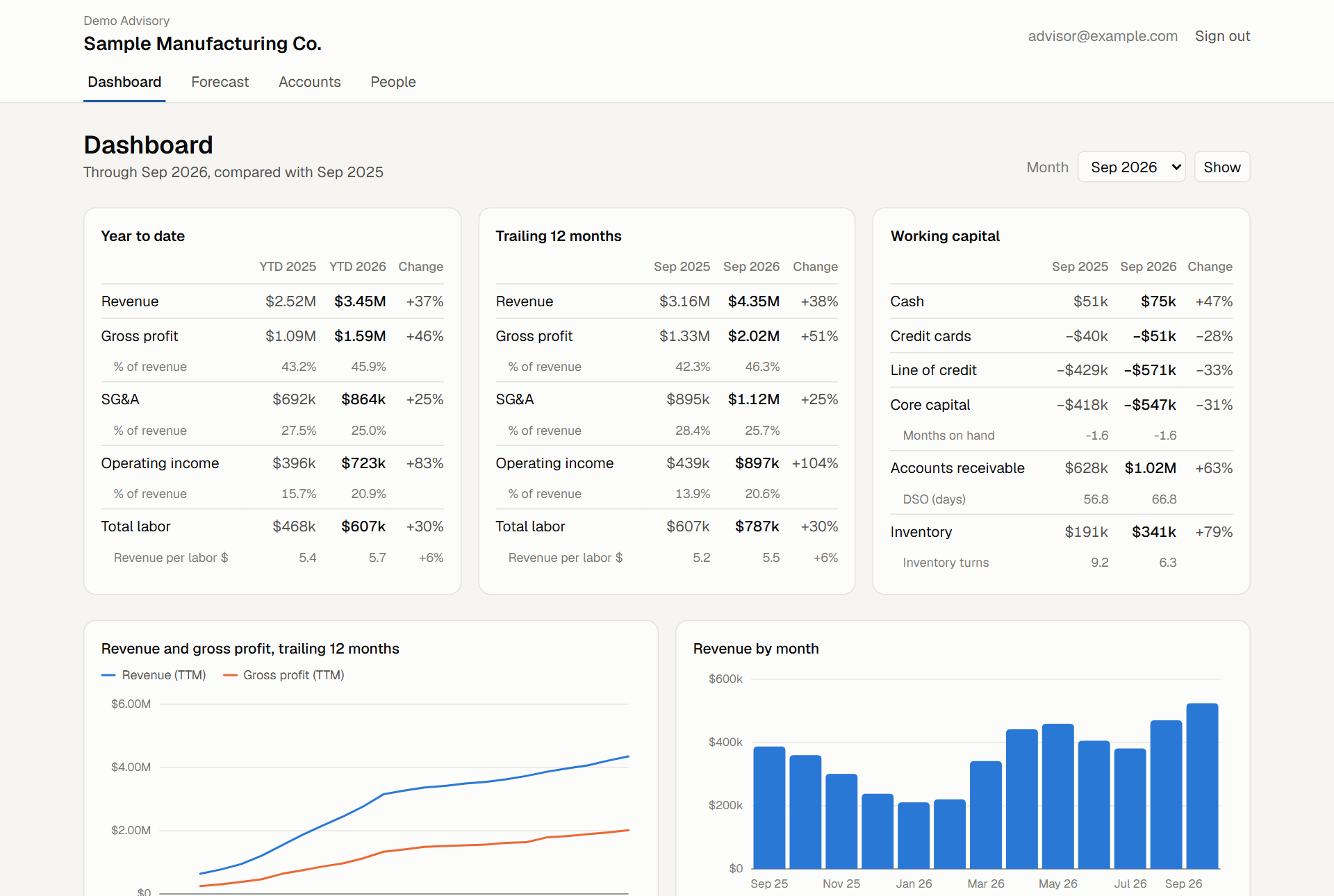
Most of the businesses you take to market run on QuickBooks. Instead of a folder of exports that's out of date by the time you've reconciled it, connect the seller's books once. LedgerView keeps their financials synced, mapped and readable, from engagement letter to close.
The problem
P&L exports, balance sheets, tax returns and a spreadsheet the owner's bookkeeper built. Different periods, different account names. Before any analysis, someone has to put it in order.
The process runs for months. Every new month means another request to the seller, another export and another round of reconciling, while the buyer asks why the numbers moved.
Each seller's chart of accounts is different, so every model is hand-built and fragile. Your team's time goes on cleanup instead of positioning the business.
Available today
These work in LedgerView now, with QuickBooks Online.
In development · with design partners
What sell-side work needs on top of the books. We're building it with the first advisory firms that join, in the order they need it. None of this is available yet.
Concept · not yet built
| Reported EBITDA | 1,184,000 |
| Owner compensation above market | + 145,000 |
| One-time legal settlement | + 62,000 |
| Personal vehicle and travel | + 21,500 |
| Adjusted EBITDA | 1,412,500 |
Each add-back linked to the QuickBooks accounts and months it comes from.
How a mandate runs
Add the seller as a company in your firm's LedgerView.
They approve the QuickBooks connection once. Nothing changes in their books.
Your team maps the seller's accounts to your standard lines, once.
Every new month arrives on its own. You spend the time on the story, not the spreadsheet.
Design partners
We're looking for a small number of sell-side firms to use LedgerView on live mandates and decide what gets built first. Design partners get:
Questions
No. LedgerView organises the seller's own books and keeps them current. It isn't an audit or a QoE, and doesn't replace the accountants who prepare one. It does hand them cleaner, better-organised numbers to start from.
No. They approve a read-only connection once, and can disconnect it at any time. Your team does the account mapping inside LedgerView.
Not today. Access is limited to your firm and the seller's own people. Exports for the data room are on the roadmap above.
QuickBooks Online is supported today, with Xero next. For sellers on other systems or sending statements and spreadsheets, tell us what you receive. That's on the deal-layer roadmap and we want real examples to build against.
Per seller company, per month, so it follows your active mandates. Design partners join at a reduced rate. Ask us.
Become a design partner
How many mandates you run at once, what sellers send you, and what you hand to buyers. We'll walk you through LedgerView on a sample company and talk about what to build first.